IPTV Streaming Infrastructure Explained: How Premium Services Deliver Quality
When you press play on an IPTV channel and a crystal-clear 4K stream appears on your screen within seconds, a vast and complex IPTV streaming infrastructure is working behind the scenes to make it happen. Understanding this infrastructure is not just technical curiosity. It is the key to understanding why some IPTV providers deliver rock-solid performance while others constantly buffer, freeze, and drop connections. The difference always comes down to infrastructure investment and engineering.
In this deep dive, we explore every layer of IPTV streaming infrastructure, from content acquisition and encoding to server clusters, content delivery networks, anti-freeze technology, and last-mile delivery. By the end, you will understand exactly what to look for in a provider and why services like EdIPTV, with their 99.9 percent uptime and anti-freeze technology, can deliver 29,500 plus channels without breaking a sweat.
The IPTV Streaming Infrastructure Pipeline
IPTV delivery follows a pipeline with several critical stages. Content must be acquired from source broadcasters, encoded into streamable formats, stored on servers, distributed across a network of delivery points, and finally transmitted to your device. A weakness at any stage of this pipeline affects the end-user experience, which is why budget providers who cut corners on infrastructure cannot match the quality of premium services.
Let us walk through each stage to understand how the best IPTV providers engineer their infrastructure for reliability and quality.
Content Acquisition and Source Quality
The first stage of any IPTV streaming infrastructure is content acquisition. Source feeds from broadcasters must be captured at the highest available quality. Premium providers capture feeds at their native resolution and bitrate, whether that is 4K HDR for premium sports channels or 1080p for standard entertainment. Budget providers often capture at lower quality to save bandwidth costs, which means no amount of downstream optimization can recover the lost detail.
EdIPTV acquires source feeds at their maximum native quality, ensuring that when a broadcaster transmits in 4K with HDR metadata, that quality is preserved end to end through the entire delivery chain. The result is picture quality that matches or exceeds what you would get from a satellite dish or cable connection.
Encoding and Transcoding: The Quality Bottleneck
Once acquired, source feeds must be encoded into formats suitable for internet delivery. This is where IPTV streaming infrastructure gets technically demanding. Modern IPTV uses advanced codecs like H.265/HEVC and increasingly AV1, which compress video much more efficiently than older H.264. A 4K stream using H.265 might require 15 to 20 Mbps, while the same quality in H.264 would need 30 to 40 Mbps.
The best providers use adaptive bitrate encoding, creating multiple quality tiers for each channel. A single channel might have 4K HDR at 20 Mbps, 1080p at 8 Mbps, 720p at 4 Mbps, and 480p at 2 Mbps versions. Your IPTV app automatically selects the tier matching your available bandwidth, and can switch between tiers mid-stream if your connection fluctuates. This is why premium providers rarely buffer while budget services with single-bitrate encoding either play perfectly or not at all.
Server Architecture: The Backbone of Reliability
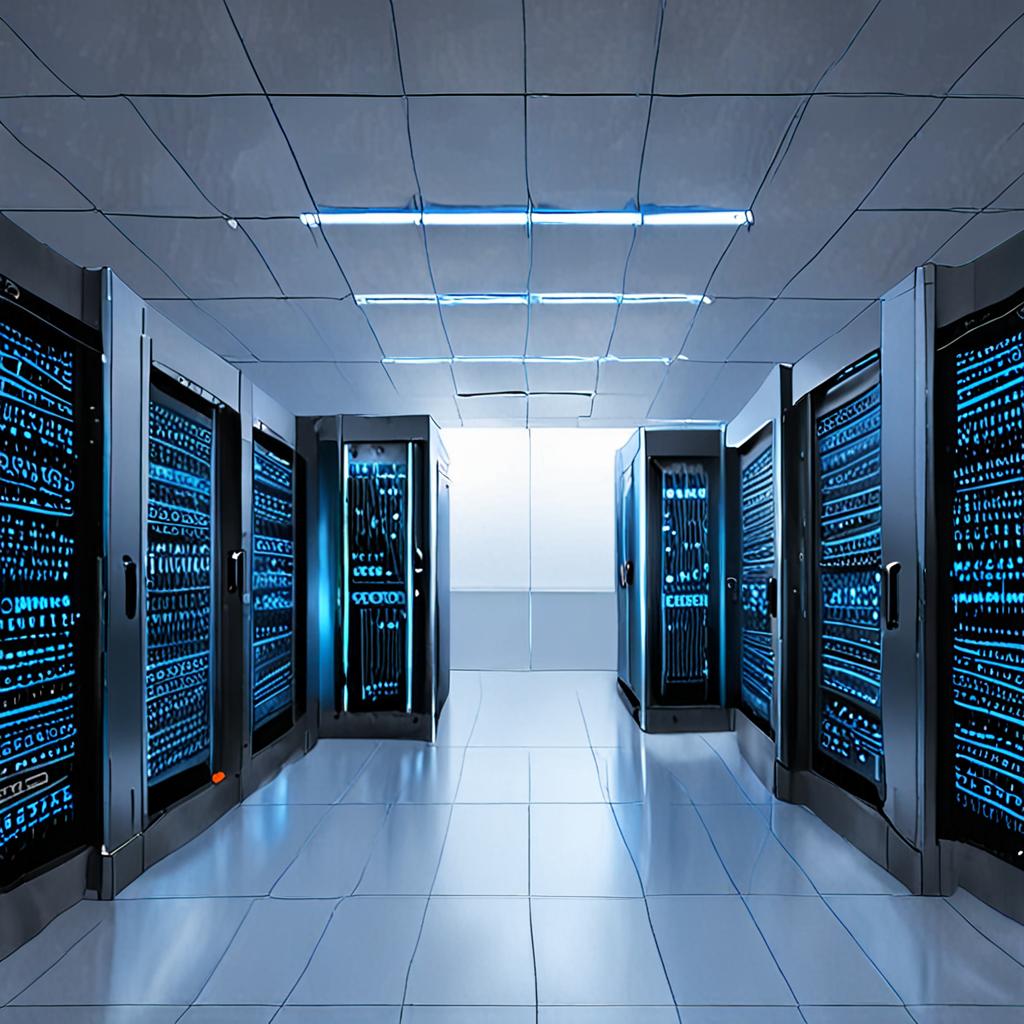
Server infrastructure is arguably the most important component of IPTV streaming infrastructure and the area where spending decisions have the most visible impact on user experience. Budget IPTV providers often run their entire service from a handful of servers in a single data center. When load spikes during a major football match, those servers are overwhelmed, and every subscriber experiences buffering or complete outages.
Premium providers like EdIPTV deploy distributed server clusters across multiple geographic locations. If you are in the UK, your stream is served from European servers. If you are in North America, a US-based server handles your connection. This geographic distribution reduces latency, balances load, and provides redundancy. If one server cluster experiences issues, traffic automatically reroutes to healthy servers without any interruption to your viewing.
The scale of investment matters enormously. Supporting 29,500 plus channels simultaneously, with thousands of concurrent viewers per channel during peak times, requires enterprise-grade hardware with high-performance CPUs, massive RAM allocation, and NVMe storage for rapid content access. Budget providers simply cannot afford this infrastructure, which is why they consistently fail during high-demand periods.
Content Delivery Networks and Edge Caching
Content delivery networks, or CDNs, extend the server infrastructure by placing cached content closer to end users. Instead of every viewer's stream traveling from a central server potentially thousands of miles away, CDN edge nodes store and serve popular content from locations near the viewer. This dramatically reduces latency and improves stream startup times.
For live IPTV, CDN architecture is more complex than for on-demand video. Live streams cannot be pre-cached in the traditional sense since the content is being generated in real time. Instead, IPTV CDNs use edge servers that receive the live stream from the origin server and redistribute it to local viewers. A well-engineered CDN can serve millions of simultaneous viewers of the same live channel without proportional load increases on the origin infrastructure.
Anti-Freeze Technology: How EdIPTV Eliminates Buffering
Anti-freeze technology is EdIPTV's proprietary approach to stream reliability and represents the cutting edge of IPTV streaming infrastructure. Traditional IPTV delivers your stream from a single server connection. If that connection encounters any issue, congestion, hardware fault, or routing problem, your stream freezes until the problem resolves or you manually reconnect.
Anti-freeze technology maintains multiple simultaneous pathways between your device and the streaming infrastructure. If the primary connection degrades, the system instantly switches to an alternative pathway without any visible interruption. The transition happens in milliseconds, far faster than the human eye can detect. This is why EdIPTV can guarantee 99.9 percent uptime even during the most demanding viewing periods.
The technology also includes predictive load balancing that monitors server health across the entire infrastructure in real time. When the system detects that a particular server or network path is approaching capacity, it proactively redistributes new connections to less loaded resources before any degradation occurs. This preventive approach means problems are solved before viewers ever experience them.
Last-Mile Delivery: Your Internet Connection
The final piece of the IPTV streaming infrastructure puzzle is the last mile, the connection between the nearest CDN edge node and your device. This is the one component the IPTV provider does not directly control, but a well-designed service can mitigate last-mile issues through adaptive streaming, efficient codec use, and smart buffering algorithms.
For optimal IPTV performance, a minimum internet speed of 10 Mbps is recommended for 1080p streaming, and 25 Mbps for 4K content. If your household has multiple simultaneous IPTV streams, multiply accordingly. Most modern broadband connections in the UK and Europe comfortably exceed these requirements, meaning that with a quality provider like EdIPTV, your internet connection is almost never the bottleneck.
Why Infrastructure Determines Your IPTV Experience
The difference between a premium IPTV provider and a budget one ultimately comes down to IPTV streaming infrastructure investment. Two providers might both claim 29,000 channels and 4K quality, but the one with distributed server clusters, enterprise-grade encoding, CDN edge delivery, and anti-freeze technology will deliver a fundamentally different experience from the one running off a single rented server.
This is why EdIPTV's 99.9 percent uptime guarantee is not marketing hyperbole but an engineering achievement. It reflects massive ongoing investment in the infrastructure that makes buffer-free 4K IPTV possible. When you stream 29,500 plus channels and every single one loads instantly, plays smoothly, and never freezes, you are experiencing the result of world-class streaming infrastructure.
Try EdIPTV free for 24 hours and experience premium IPTV streaming infrastructure in action. Contact the team via WhatsApp at +1 (559) 508-2154 to activate your free trial. With 29,500 plus channels, 4K streaming, anti-freeze technology, and 99.9 percent uptime, EdIPTV proves that infrastructure quality is the foundation of an exceptional IPTV experience. Get started today.
Ready to Start Streaming?
Get instant access to 20,000+ live channels, 4K streaming, and 80,000+ movies and series.
View Plans & Pricing